
From helicoptersto quadcopters and more: psychopter implications through technomimicry
Cognitive Navigation of the Elements as Indicative Strategic Metaphors (Part #7)
[Parts: First | Prev | Next | Last | All] [Gallery] [Links: To-K | From-K | From-Kx | Refs ]
As noted above, insights from helicopter development by Arthur Young have been the inspiration for this argument. The many helicopters that have been designed, and are currently in operation, are usefully summarized separately (World helicopters (and other rotorcrafts). The following sections distinguish the multi-rotor models which have since emerged -- notably as drones -- especially in the light of their potential implications for strategic governance.
The focus in what follows is the implication for strategic governance which could be elicited from the quality of thinking evident in consideration of multi-rotor vehicles -- if the technical issues and designs can be "repurposed". Possibilities of technomimicry are seen as a matter of adapting patterns explicit in multi-rotor design and viability to those of governance understood as one of navigating a strategic "vehicle".
The emphasis here is less on the contrasting designs and more on the implication for the control of such vehicles. Rather than the objective insights elicited and inculcated during pilot training, the emphasis is on the much-valued instinctual understanding in experiential terms. This has frequently been described by the phrase "flying by the seat of the pants" (Aviation Innovation: "Flying by the Seat..." ).
The question is how this translates into the realm of governance. One indication is the capacity described as "muddling through" by Charles Lindblom (The Science of "Muddling Through", Public Administration Review, 19, 1959, 2). This has been widely reviewed and discussed (Andrea Migone, et al, Charles E. Lindblom, The Science of "Muddling Through", The Oxford Handbook of Classics in Public Policy and Administration, 2015; R. J. Scott, The Science of Muddling through Revisited, Emergence: Complexity and Organization, 12, 2010, 1)
Monocopters and 1-fold strategic governance: As indicated below with respect to the traditional helicopter, this is not viable without a counteracting rotor, whether incorporated into a single coaxial design or operating orthogonally at the end of a tail boom.
The challenge of viable operation can perhaps be usefully compared with that of riding a unicycle. In attempting to deal with complexity, simplistic "mono-factor" thinking is notably criticized by Edgar Morin (Pour Sortir du XXe Siecle, 1981), as discussed separately (Beyond single-factor strategy development, 2008). Such problematic thinking is typically cultivated with the unquestioned assumption that "one model fits all" (Adhering to God's Plan in a Global Society , 2014; One Plan for One Planet, One Planet Network, 18 May 2018). It is currently typical of the quest to ensure global hegemony by the United States.
Inspired by his work on the helicopter, Young's circular "Rosetta Stone of meaning" (as presented above) could indeed be understood as the archetypal monocopter. Young intended it to embody the design principles of a psychopter. As discussed below, the question is whether and how a response to the challenges of psycho-social torque have been "designed in" such as to render it viable.
A response to those challenges may indeed be implicit, as may well be the case with any initiative to conceive of a singular framework -- "One Plan" thinking. The use of such a framework to achieve strategic lift-off in practice may however require a more explicit embodiment of a countervailing dynamic. Failure to do so elicits an only too obvious opposition with a countervailing perspective -- condemned as "dissidence".
Twin copters and 2-fold strategic governance: Clearly it is the 2-rotor variant with which there is greatest familiarity (Rinson Raj, Twincopter, Scribd; K Likith, et al, Design and Development of a Telescopic Twin-copter , IEEE Explore, 2021). In the case of governance, this is most evident in the pattern of government-and-opposition -- or in bicameral parliamentary systems.
Somewhat ironically such governance invites comparison with the bicycle and the skill required to ride it successfully -- initially exemplified by the "penny-farthing" and the elusive possibilities of bipartisanship. The constraints are suggested by those of the "two-stroke engine", as noted above.
It can be usefully asked whether the current difficulties of 2-fold governance are comparable to the difficulties of learning to ride, or even to walk (Transcending duality as the conceptual equivalent of learning to walk, 1994). The occasional use of an adversarial Red Team -- to challenge the unquestioned assumptions of a Blue Team -- is an indication of how insights from the strengths and weaknesses of both may be sought.
Complementary dynamics could be derived as two counteracting circular configurations from Young's single circle -- most obviously as those distinguished as positive and negative. The argument is developed further below through deriving a 3-fold configuration, or more (Alternatives to "2-stroke democracy" suggested by 4-sided ball games, 2016)
Tricopters and 3-fold strategic governance: In the development of rotorcraft, those propelled by three lift-generating rotors (namely tricopters) have been a significant focus of attention as the simplest in the range of multicopters. Variants are readily available to hobbyists (Best Tricopters for Fun and Pleasure: Review and Comparison , Best Advisor, 9 February 2023). Guidance for their construction is similarly offered (Build Your First Tricopter , Make Magazine; The CW Tricopter , RC Airplanes Simplified; Shay Sackett, Tricopter, Project Portfolio, 2015; Make Your Own Tricopter, Autodesk Instructables).
A Flike (a portmanteau of fly and bike), developed as a manned personal tricopter (similar in concept to a hoverbike), achieved its first manned flight in 2015. The question is what such vehicles might suggest for strategic governance.
Two variants of a 3-fold pattern may be derived from Young's singular configuration, as shown below. The challenge of torque and viability could then be understood in terms of the feedback loops between the 4 experiential perspectives within each pattern. There is some irony to the traditional enthusiasm for 4-leaf clover as an auspicious indication of some kind of uplift. This extends to a degree of appreciation of triadic symbols and logos (Cognitive Implications in 3D of Triadic Symbols Valued in 2D, 2017).
| Tricopter reinterpretation of Young's singular configuration | |
| Variant A | Variant B |
 |  |
Such configurations frame a challenge to any 3-fold strategic framework or set of principles -- and potentially to conceptions of "third way" governance, or tripartisanship (Crystal Williams, The Triadic Strategies: An Overview, Oneop, 22 September 2021). There are many fundamental sets of principles held to be 3-fold. Far less obvious is the articulation of those principles to render the pattern strategically viable -- especially in terms of their necessary relationship to one another.
Ironically notable is the focus of the Pentagon on this 3-fold framing:
- Nuclear triad as a three-pronged military force structure (Nuclear Triad, US Department of Defense)
- Mapping the Third Offset: Australia, the United States and Future War in the Indo-Pacific (United States Studies Center, 5 December 2017)
- Peter Dombrowski: America's Third Offset Strategy: new military technologies and implications for the Asia Pacific (S. Rajaratnam School of International Studies, June 2015)
- John Garnaut: US unsettled by China's 'three warfares' strategy: Pentagon report (The Sydney Morning Herald, 11 April 2014)
Given the typical theological importance of such a configuration through mystical allusion, it is especially interesting to note the analysis of how Dante Alighieri describes the three rings (tre giri) of the Holy Trinity in Paradiso 33 of the Divine Comedy (Arielle Saiber and Aba Mbirika, The Three Giri of Paradiso XXXIII, Dante Studies, 131, 2013, pp. 237-272). That remarkable interdisciplinary exploration combines insights from speculative theology, geometry and knot theory, as discussed separately (Borromean challenge to comprehension of any trinity? 2018).
The cognitive implications of a 3-fold conceptual configuration can be explored otherwise (Triangulation of Incommensurable Concepts for Global Configuration, 2011; Reframing the Dynamics of Engaging with Otherness: Triadic correspondences between Topology, Kama Sutra and I Ching, 2019; Triadic combination -- the dynamics of the attractor, 2007). Paris Arnopoulos (Braiding the Triadic Codex and Triple Helix: the sociophysics of nature-culture-nurture and academy-industry-polity, Third Triple Helix International Conference, 2000). The latter is a contribution to the Triple Helix model of innovation.
In contrast to the limitations of the binary Red Team / Blue Team process (noted above), of relevance is occasional mention of a 3-fold variant (Daniel Meissler, The Difference Between Red, Blue, and Purple Teams, 12 August 2021; Sharon Shea, Red team vs. blue team vs. purple team: What's the difference? TechTarget, November 2020)
Quadcopters and 4-fold strategic governance: Considerable research is evident with respect to quadcopter design and their viability:
- G. Hoffman, et al: Quadrotor Helicopter Flight Dynamics and Control: Theory and Experiment (Conference of the American Institute of Aeronautics and Astronautics, 2007)
- Jesse Stafford: How a Quadcopter works (University of Alaska, 2014)
- J. G. Leishman: Principles of Helicopter Aerodynamics. Cambridge University Press, 2000)
- 5 Best Quadcopters (Best Reviews, January 2023)
Again considerationcan be given to the possible adaptation of Young's approach, as indicated below.
| Quadcopter reinterpretation of Young's singular configuration | |
| Variant A | Variant B |
 |  |
The relative complexity of a 4-fold pattern is more evident in the subtleties of the psychosocial realm, notably as addressed by C. G. Jung with respect to a 4-fold pattern of disparate psychological types. Further examples include:
- Maud van Lier: Introducing a four-fold way to conceptualize artificial agency (Synthese, 201, 2023, 85)
- G. Venkatesh: Sustainable Development: the four-fold path for governance (Problemy Ekorozwoju, 8, 2013, 2)
- Obama sketches 4-pronged strategy for Europe, sees EU consensus (Reuters, 22 May 2012)
- Four-fold CIO Strategy for a Truly Digital Enterprise (Newgen)
- Four-Fold Concept Development Strategy (TPSConnect)
- Our Four Fold Strategy In Lifting Children to New Life In Christ (Child Beyond International)
- A 4-Fold Strategy for Making Disciples (That Really Works) (Replicate)
Hexacopters and 6-fold strategic governance: A degree of attention is given to hexacopter design (Hexacopter Drone, Armed Assault Wiki; Best Hexacopter Drones for Sale, Drones for Sale; Top 10 Best Hexacopter Drones, Filmora, 1 September 2022).
The adaptation of Young's model might then take the following form.
| Hexacopter reinterpretation of Young's singular configuration | |
| Variant A | Variant B |
 |  |
Examples of 6-fold strategic thinking are far less evident, and primarily associated with Eastern perspectives:
- Masood-Ur-Rehman Khattak: Indian Strategic Thinking: a reflection of Kautilya’s Six Fold Policy (Eurasia Review, 29 March 2011)
- Leon Du Preez: A Six-Fold Ministry? (YouTube)
- Chanakya's Six-fold policy and its relevance for diplomacy in the emerging world (Samvada World, 2021

Octocopters and 8-fold strategic governance: A seemingly lesser degree of attention is given to octocopter design (Paul Posea, Top 5 Octocopter Drones 2023: Compared and Reviewed, Drones Gator, 2023; 3 Best Octocopter Drones, Drones for Sale, 2019; Svetoslav Zabunov, et al, H-Airframe Based Octo-Rotor Unmanned Helicopter November 2014).
With respect to governance, most evident has been the traditional references to the Noble Eightfold Path of Buddhism and various "emulations", as with the eightfold path of policy analysis. Of greatest relevance globally has been the UN's 8-fold set of Millennium Development Goals. Also noteworthy is The Deloitte and Eightfold Alliance , comprising an Intelligence Platform to identify the skills and capabilities for all talent at scale.
The alternative presentations of the classical Chinese Ba Gua pattern reflect another recognition of the 8-fold (as shown below). Superimposition of lauburu and BaGua mirror: Given the manner in which the heart pattern was elicited from the construction of the lauburu, and the suggested correspondence with the BaGua mirror, there is a case for exploring the indications they offer with respect to feedback loops from the animations below.
| Experimental rotation of alternative Lauburu patterns over alternative BaGua patterns (reproduced from Transformation pathways in multivocal discourse, 2016) | |
| Anti-clockwise over King Wen pattern | Clockwise over Fuxi pattern |
 |  |
The complexification of the above schematic (as presented below) endeavours to:
- give central focus to the subjectivity of the begging moment and its confusion, especially in evoking intangible values
- highlight the ambiguity associated with the different threads in terms of the contrasting manner in which they are experienced from an internal perspective and portrayed externally from a collective (objective) perspective -- using a set of Möbius strips to hold both that ambiguity and the paradoxical limitations on conventional definitions
- offer both an apparent internal locus within each Möbius strip and an apparent external locus -- labelled to indicate contrasting preoccupations (however illusory)
- tentatively present an 8-fold configuration of "dimensions" (recognizing those other distinctions might be made to amend and enrich the mapping) which could arguably be collapsed/conflated to a:
- 6-fold configuration: combining conscience-alleviation/alms-giving and public relations/image and identity cultivation
- 5-fold configuration: combining marketing and negotiation
- 4-fold configuration: combining game-playing within marketing/negotiation
| Tentative mapping of the cognitive nexus of the "begging moment" (Mapping the cognitive dynamics of the begging moment, 2015) |
 |
Decacopters and 10-fold strategic governance: There is some interest in the possibility of decacopters (Decacopter is that available? (ArduCopter - ArduPilot Discourse; NASA's 10-Rotor UAV Hovers Like a Helicopter, Flies Like an Airplane Drone, Discover, 5 May 2015; Open Source Decacopter Drone, Open Source Ecology, 2017.
Given the fundamental importance attached to the Ten Commandments, it is perhaps not surprising that this has engendered a number of corresponding 10-fold "emulations":
- Richard Coates: "10 Commandments" of Business Strategy (WhiteCap, 17 June 2019)
- Kimball Norup: The 10 Commandments of Effective Growth Strategy (1CMO, 1 February 2021)
- John Thwaites: The ten commandments of influencing government (Water Sensitive Cities)
- The Ten Commandments of Management (Knowledge at Wharton, 9 January 2008).
- 10 Commandments of a risk manager according to ChatGPT (Wolters Kluwer, 11 April 2023)
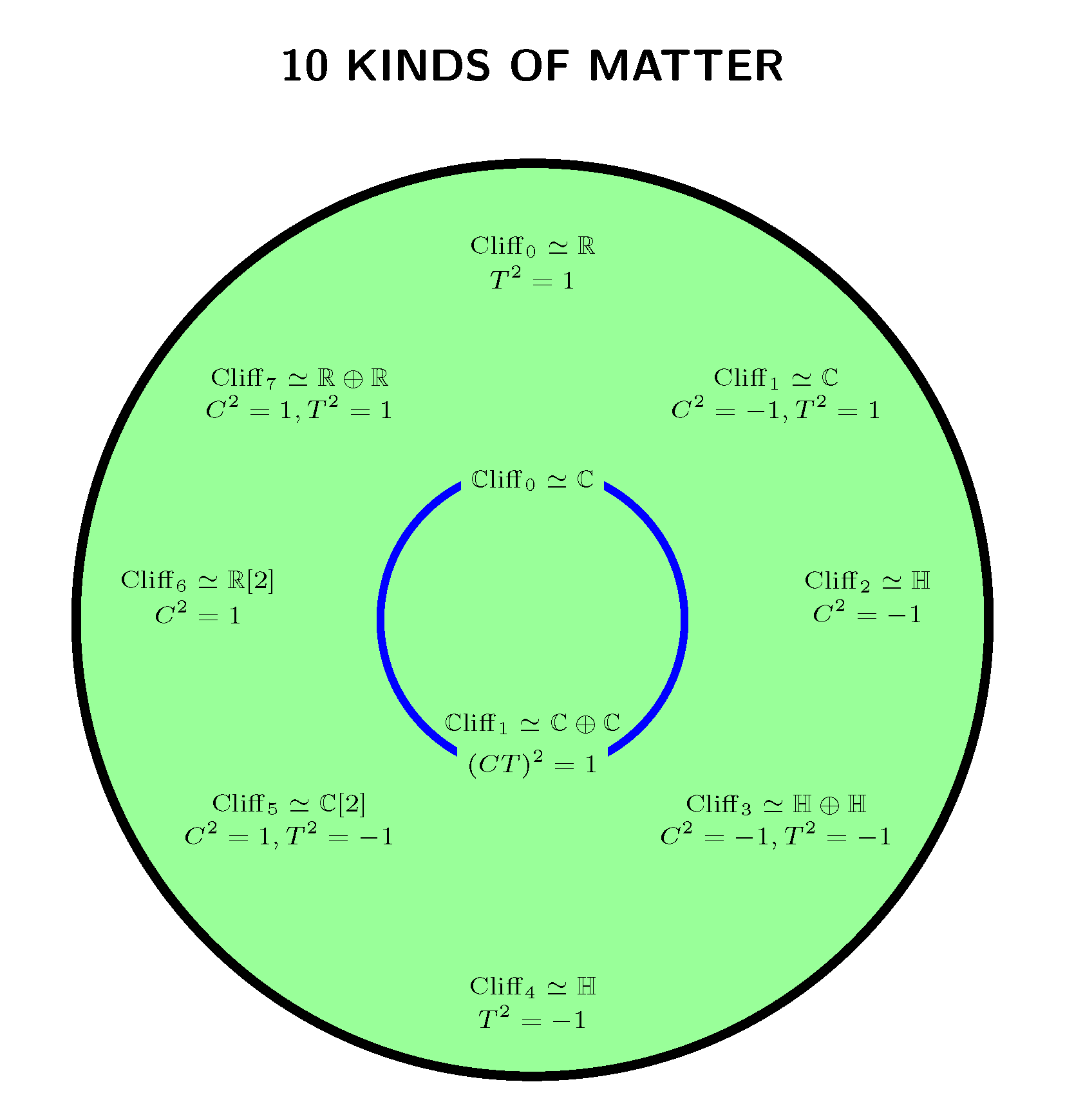
Less evident, as with any checklist, is how any one "commandment" relates to the others in a systemic sense. Otherwise the pattern seems only occasionally to have acquired significance (The Ten-Fold Way, The n-Category Café), notably in the application to Ten-fold Engineering. The systemic perspective is far more evident in 10-fold cross-validation (Isaac Kofi Nti, Why most machine learning applications use 10-fold cross-validation, University of Energy and Natural Resources, 20 May 2021; Why is 10 considered the default value for k-fold cross-validation? Data Science, 2021).
Dodecacopters and 12-fold strategic governance: As with the decacopter, references to the dodecacopter are relatively limited:
- Sahin Yildirim, et al: Modelling and Control of Proposed Two Dodecacopter Systems (International Journal of Applied Mathematics Electronics and Computers, 8, 2020, 2)
- Svetoslav Zabunov, et al: Innovative Dodecacopter Design – Bulgarian Knight (January 2018)
- Muhammad Lut Liwauddin, et al: Development of A Dodecacopter using Pixhawk 2.4.8 Autopilot Flight Controller (IEEE 5th International Symposium in Robotics and Manufacturing Automation (ROMA), 2022)
- Mairim Nieves Nevárez, et al: Dynamic Modeling and Control System Design for a Passenger Coaxial Dodecacopter (Polytechnic University of Puerto Rico)
Arguably it could be recognized that 6-rotor hexacopters could be considered dodecacopters -- when each rotor is coaxial, with one set of blades rotating clockwise and the other counter-clockwise.
| Question to ChatGPT as to why there are no viable dodecacopters: |
There is no inherent reason why a dodecacopter, or a 12-rotor drone, would not be viable. However, it is important to note that the design and operation of multi-rotor drones, including dodecacopters, involve complex aerodynamic and control challenges. As the number of rotors increases, the complexity of the system also increases, making it more difficult to control and stabilize the drone. Additionally, the weight of the drone, the power requirements, and the maneuverability can also become more challenging as the number of rotors increases. Furthermore, the use of dodecacopters or multi-rotor drones in general, is often limited by regulations and safety concerns, as they may pose a risk to other aircraft and people on the ground. Overall, while there is no fundamental reason why a dodecacopter would not be viable, designing and operating a 12-rotor drone presents significant technical and regulatory challenges that need to be carefully considered and addressed. |
With respect to strategic governance, a 12-fold pattern is potentially particularly interesting in the light of the widespread preference for this articulation, as noted separately (Checklist of 12-fold Principles, Plans, Symbols and Concepts , 2011). This was an inspiration for the exploration of how a 12-fold pattern of governance might "work" in practice, notably given the archetypal significance associated with 12-fold roundtables:
- Eliciting a 12-fold Pattern of Generic Operational Insights: recognition of memory constraints on collective strategic comprehension (2011)
- Enabling a 12-fold Pattern of Systemic Dialogue for Governance (2011)
- Clarifying the Unexplored Dynamics of 12-fold Round tables: visualization of patterns of sustainable discourse between 12 systemic archetypes (2019)
- Topological Clues to a Memorable 12-fold Systemic Pattern (2011)
- 12-fold Modalities for "heavy duty" global governance? (2008)
Rather than bicameral or tricameral arrangements, provocatively it might be asked whether effective governance calls for a dodecameral configuration of decision-making (Necessity of encompassing a "hole" -- with a dodecameral mind? 2018).
Vodocopter (12 + 6 rotors): With respect to the quality of thinking to ensure the viability of 12-fold governance, of particular interest is the successful development by Vodocopter of the Volocity air taxi (Electric air taxis being developed for Paris Olympics in 2024 , The Guardian, 22 March 2023). As indicated in the image below, this has an array of 18 rotors in an outer ring of 12, with an inner ring of 6.
In relation to the UN's 17 Sustainable Development Goals, this usefully frames the provocative question as to whether that initiative could have been more viably designed with 18 Goals -- a cluster of 12 relating to a cluster of 6 -- in order to ensure "lift-off" (Requisite 12-fold organization implied by the 17-fold articulation of value goals -- as its "stellations"? 2017). With respect to metaphorical insight into the "aerodynamics of governance" in relation to any assumed viability of the 12-fold, it is appropriate to note other strategic patterns of this order of complexity (Pattern of 14-foldness as an Implicit Organizing Principle for Governance? Web resources. 2021; 15 Global Challenges of the Millennium Project; The Next Generation of Emerging [16] Global Challenges, Policy Horizons Canada, 19 October 2018).
| Vodocopter with 12 + 6 rotors |
 |
| Image from Vodocopter |
[Parts: First | Prev | Next | Last | All] [Gallery] [Links: To-K | From-K | From-Kx | Refs ]